


Using Vinyl Sheet Piles in the Middle East: Overcoming Heat, UV Exposure, and Installation Challenges
- ESC Group

- Dec 16, 2025
- 6 min read
Vinyl sheet piles are increasingly recognized as a modern alternative to traditional steel and timber piling systems. Their role in infrastructure is critical, particularly in coastal defense, flood protection, and land reclamation projects. Unlike conventional materials, vinyl offers a unique combination of corrosion resistance, lightweight handling, and cost efficiency.z
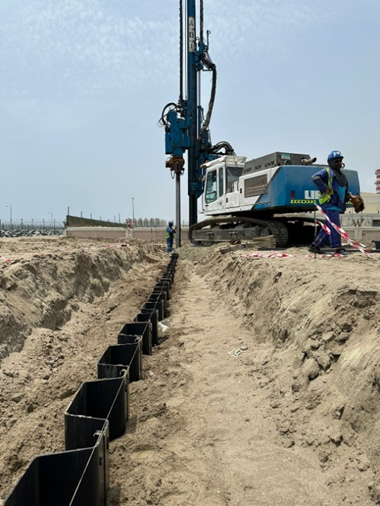
Yet, the Middle East presents a set of environmental and logistical challenges that are unlike those in temperate regions. The region’s climate is branded by extreme heat, sharp temperature fluctuations between day and night, and some of the highest levels of solar radiation in the world. Coastal areas face saline groundwater and chemically aggressive soils, while inland desert sites often require complex logistics for material delivery and installation.

For engineers and project owners, these conditions demand specialized solutions. Without adaptation, materials can degrade quickly, leading to costly repairs and reduced service life. Long-term performance cannot be achieved by simply importing standard practices from other regions. By integrating advanced formulations, reinforcement strategies, and installation techniques tailored to desert and coastal environments, vinyl sheet piles can deliver long-term performance.
ESC Group Middle East has been at the forefront of this innovation, ensuring projects meet international standards while addressing local conditions.

Understanding Vinyl Sheet Piles
Vinyl sheet piles are engineered interlocking sections made from PVC or advanced composite vinyl materials, designed to create continuous, watertight barriers capable of resisting water intrusion, soil movement, and various environmental pressures. Driven deep into the ground, they serve as reliable structural elements for shoreline protection, erosion control, cut‑off walls, and a wide range of civil engineering applications.
What sets vinyl sheet piles apart is their exceptional corrosion resistance. Unlike steel, vinyl does not rust or deteriorate when exposed to seawater, saline groundwater, or chemically aggressive environments, making it a superior choice for coastal, marine, and industrial sites where corrosion is a constant threat.
Their lightweight composition further enhances their practicality—significantly reducing transportation costs and simplifying installation. This becomes especially valuable in remote desert regions, island communities, or locations with limited access to heavy lifting equipment.
Beyond performance, vinyl sheet piles deliver strong economic advantages. Their lower material cost, faster installation, and minimal maintenance requirements translate into highly favorable lifecycle savings compared to traditional alternatives. When manufactured with high‑quality formulations, vinyl sheet piles offer long-term durability, maintaining structural integrity for decades even under continuous environmental exposure. This combination of resilience, efficiency, and cost-effectiveness makes vinyl sheet piles a compelling solution for modern infrastructure and environmental protection projects.
Challenges in Middle Eastern Conditions
Extreme Heat and Temperature Variations
Temperatures in the Middle East can exceed 50°C during summer months. Such heat can soften vinyl materials, potentially affecting their stiffness and load-bearing capacity. Nighttime cooling introduces thermal cycling, which can lead to expansion and contraction stresses. Over time, these cycles may compromise structural integrity if not properly accounted for in design.

UV Exposure and Material Degradation
The Middle East experiences some of the highest UV indices globally. Prolonged exposure to intense sunlight accelerates the aging of polymers, causing discoloration, brittleness, and reduced mechanical strength. Without UV-resistant formulations, vinyl sheet piles may lose their protective qualities within a shorter timeframe.
Soil and Groundwater Conditions
Coastal soils in the Arabian Gulf and Red Sea regions are saline and chemically aggressive. Groundwater often contains chlorides and sulfates, which corrode steel but require vinyl formulations tested for compatibility.

Installation Challenges
Logistics in Remote Sites: Desert projects often require long-distance transport over challenging terrain. Lightweight vinyl piles help, but supply chain planning is critical.
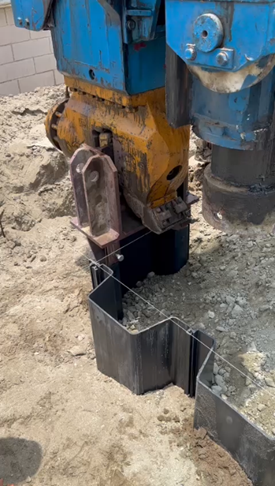
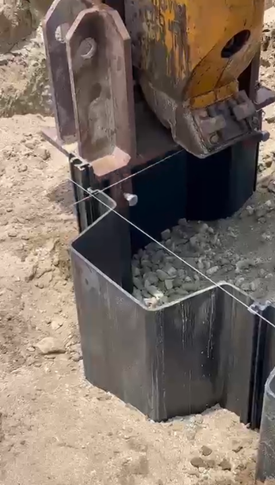
Handling and Equipment Considerations: While vinyl is lighter, it requires careful handling to avoid damage while driving. Specialized vibratory hammers or pressing equipment may be needed to ensure proper interlock without cracking.
Coastal Construction Constraints: Tidal movements, soft soils, and limited access points complicate installation, requiring adaptive techniques.

Engineering Solutions and Best Practices
UV-Resistant Vinyl Formulations
Modern vinyl sheet piles incorporate stabilizers and additives that absorb or reflect harmful UV radiation. These formulations extend service life by preventing polymer breakdown. ESC offers customized blends specifically designed for Middle Eastern sunlight conditions.
Reinforcement Strategies
In high-load applications, vinyl sheet piles can be reinforced with steel or composite elements. Hybrid systems combine the corrosion resistance of vinyl with the strength of steel, ensuring stability under heavy soil or hydraulic pressures.
Installation Techniques Adapted for Desert Climates
Pre-drilling
In desert regions, soils can range from compacted sand layers to dense calcareous deposits. into Driving vinyl sheet piles directly these conditions can cause excessive resistance, leading to pile deformation or damage to the interlocks. Pre-drilling pilot holes reduces this resistance, allowing piles to be guided smoothly into position.
Advantages: Minimizes risk of cracking or bending, ensures proper alignment, and reduces wear on equipment.
Best Practice: Use augers or rotary drills sized slightly smaller than the pile width to maintain soil grip while easing installation.
Example: In arid inland projects, pre-drilling has been used to stabilize canal banks where compacted desert soils would otherwise resist pile penetration.
Vibratory Driving
Vinyl sheet piles are lighter and more flexible than steel, which means traditional impact hammers can overstress the material. Vibratory hammers apply controlled oscillations that reduce soil resistance while minimizing stress on the pile interlocks.
Advantages: Faster installation, reduced risk of pile damage, and improved interlock integrity.
Best Practice: Select vibratory drivers with adjustable frequency to match soil conditions, ensuring efficient penetration without overstressing the vinyl.
Example: Coastal projects in the Gulf region often use vibratory driving to install vinyl piles in sandy soils with high salinity, ensuring both speed and durability.

Modular Transport
Remote desert sites often lack direct access routes, making logistics a major challenge. Vinyl sheet piles’ lightweight and modular nature allows them to be bundled, stacked, and transported using smaller vehicles or even manual handling in constrained areas.
Advantages: Reduces reliance on heavy machinery, lowers transport costs, and enables delivery to sites inaccessible to large trucks.
Best Practice: Bundle piles in protective packaging to prevent UV exposure during transport and handling.
Example: In desert reclamation projects, modular transport has enabled efficient delivery of vinyl piles to isolated sites where traditional steel piles would have been impractical due to weight and handling requirements.
Compliance with Standards
Cost and Sustainability Considerations
Lifecycle Cost Benefits vs. Steel Alternatives
While steel sheet piles may offer higher initial strength, they require costly maintenance in saline environments. Vinyl sheet piles, by contrast, deliver lower lifecycle costs due to minimal upkeep and longer service life.
Environmental Impact and Recyclability
Vinyl sheet piles are recyclable at the end of their service life. Their lightweight nature reduces carbon emissions during transport and installation. By minimizing corrosion-related failures, they also reduce the need for replacement materials, contributing to sustainable infrastructure practices.
How ESC Group (Middle East) Can Help
Decades of Expertise:
Technical Support:
ESC’s involvement goes beyond supply. ESC engineers provide on-site training for contractors, ensuring proper installation techniques with vibratory hammers and interlock alignment. This technical support minimized delays and guaranteed structural integrity.
Quality Assurance:
Every ESC solution is backed by compliance with ISO 9001:2015 and international standards such as ASTM and EN.
Local Presence:
With offices and supply chain networks across the Middle East, ESC ensures rapid response and efficient delivery. ESC’s local presence enables quick mobilization, even during emergency shoreline reinforcement projects after storm surges, minimizing downtime and safeguarding critical infrastructure.
Conclusion

Vinyl sheet piles represent a forward-looking solution for infrastructure projects in the Middle East. While the region’s climate and soil conditions pose significant challenges, engineering innovations—such as UV-resistant formulations, reinforcement strategies, and adapted installation techniques—enable long-term performance.
Vinyl sheet piles are a resilient, cost-effective, and sustainable solution for infrastructure projects in the Middle East. By addressing challenges such as heat, UV exposure, and installation logistics, ESC ensures long-term durability and project success.
By partnering with ESC, project owners gain access to decades of expertise, tailored solutions, and a commitment to quality. ESC’s local presence ensures that projects are supported from design to completion, delivering durable and sustainable outcomes.
Partner with ESC Middle East today for expert guidance and durable solutions:
ᴅᴜʙᴀɪ 📞+971 4575 9690 ᴀʙᴜ ᴅʜᴀʙɪ 📞+971 2550 6188


